Follow the Water: The Infrastructure Variable Most Land Investors Overlook in India
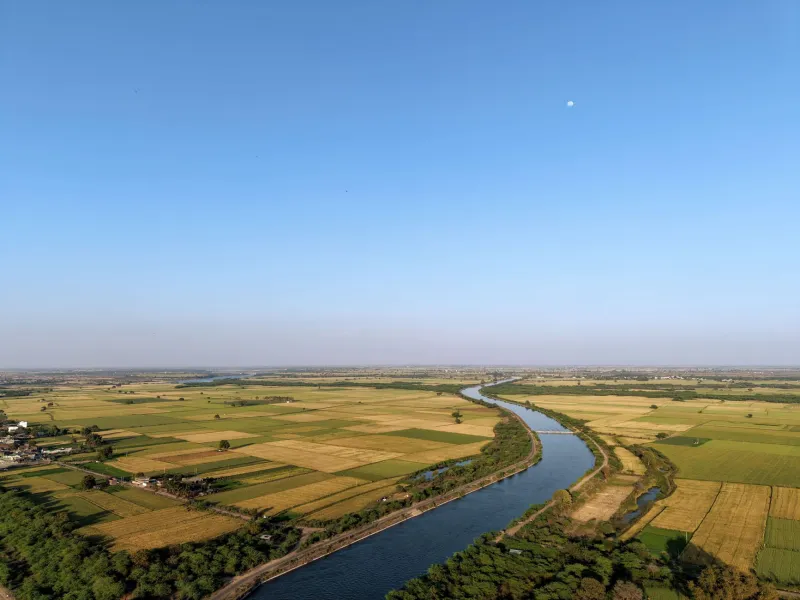
There is a pattern in land markets that most capital arrives too late to capture. Highways announce themselves with ribbon-cuttings and real estate billboards. Water arrives quietly — a canal extension here, a reservoir commissioning there — and re-prices land in a radius that no press release covers.
The thesis is simple: in the next decade of Indian land appreciation, water infrastructure will outperform road infrastructure as a value driver. Highways connect places that already have value. Water creates value where none could previously exist.
Why Water Beats Asphalt
A highway passes through a district; water transforms it. Road connectivity raises the value of land that is already usable. Irrigation converts land that was marginal — dependent on erratic monsoons, suitable for little beyond rain-fed cropping — into productive, convertible, bankable acreage.
This matters because of the second-order effect: irrigated agricultural land is the primary candidate for conversion to residential and commercial use as urbanization pushes outward. The pipeline runs from dry parcel, to irrigated parcel, to converted parcel, to plotted development. Each stage multiplies value, and the earliest stage is the cheapest to enter.
The Megaprojects Redrawing the Map
India's river-linking program — the long-debated inter-basin transfer of water from surplus to deficit rivers — has moved from white paper to construction. The Ken-Betwa link in Madhya Pradesh is underway, and subsequent links through Gujarat, Maharashtra, and the Deccan plateau are in advanced planning. Each completed link irrigates hundreds of thousands of hectares that have historically grown little beyond drought-tolerant crops.
Meanwhile, state-level schemes — Telangana's Kaleshwaram lift irrigation system, Andhra Pradesh's delta modernization, Maharashtra's canal extensions — are quietly ending water scarcity across peri-urban belts surrounding second-tier cities.
How to Spot a District Before the Water Arrives
The early-adopter method is documentary, not speculative:
- Read the irrigation department budgets. Districts receiving multi-year canal funding commitments are on the list; those with only announcements are not.
- Check the command-area notifications. When a government formally notifies the command area of a new canal or reservoir, those specific survey numbers receive water on a defined schedule.
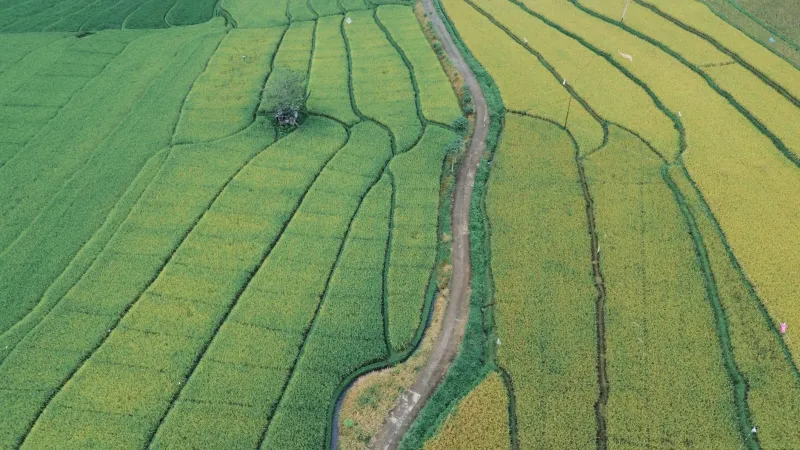
- Watch cropping patterns in satellite imagery. A shift from rain-fed millet to paddy or sugarcane in a district is the single most reliable leading indicator that irrigation has arrived — and land prices typically follow within two to three years.
- Track the conversion applications. Rising agricultural-to-residential conversion filings in an irrigated belt signal that the market is repricing ahead of the broader public.
The Uncomfortable Caveat
Water infrastructure carries execution risk. Projects slip, command areas shrink, and politics redirect canals. The mitigation is the same as in any infrastructure thesis: buy land whose current-use value is sound — decent soil, road access, proximity to a growing town — and treat irrigation as the catalyst, not the foundation.
Roads made the last generation of Indian land fortunes. Water will make the next. The investors who profit will be the ones reading canal budgets instead of highway press releases.