Patience Pays: Why India's Tier-2 Cities Are Outcompeting Silicon Valley Real Estate for Long-Term Investors
The Crowded Table Problem in American Tech-Hub Real Estate
For years, the conventional wisdom among American wealth-builders was straightforward: plant your capital in the shadow of a major technology employer — San Jose, Palo Alto, Seattle's Eastside, or Austin's Domain corridor — and let the appreciation do the heavy lifting. That strategy worked brilliantly for those who entered early. But the window has largely closed.
The median home price in Santa Clara County now hovers north of $1.6 million. Entry-level land parcels in the greater Austin metro, once celebrated as an affordable alternative, have tripled in price since 2019. Capitalization rates across these markets have compressed to levels that leave little margin for error, and property tax structures in states like California and Texas add persistent carrying costs that erode net returns year over year.
The honest assessment is this: most American investors arriving at the Silicon Valley real estate table today are not early — they are late. And late arrivals to saturated markets rarely generate generational wealth. They generate modest appreciation offset by high acquisition costs, elevated taxes, and fierce competition from institutional buyers with deeper pockets.
The more productive question for 2024 and beyond is not where in America to invest, but whether America is still the right geography at all.
India's Secondary Cities: A Different Kind of Growth Story
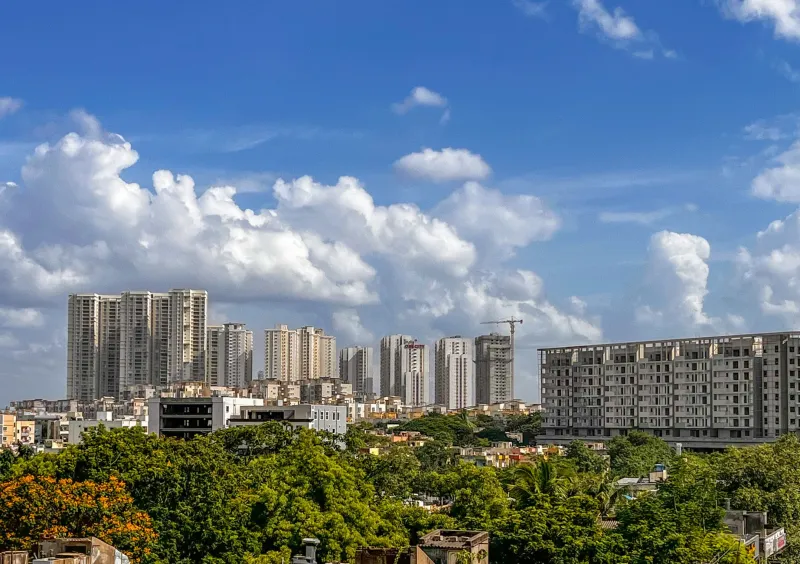
India's Tier-2 city markets operate on an entirely different demand curve. Cities like Pune, the peripheral zones surrounding Bengaluru, and the expanding infrastructure corridors of Hyderabad are not experiencing the tail end of a growth cycle — they are in the early-to-middle innings of a structural transformation that demographers and urban economists project will continue for at least two more decades.
Consider the underlying drivers. India's urban population is expected to grow by approximately 270 million people between now and 2047, according to projections from the National Institute of Urban Affairs. A significant share of that migration is flowing not into Mumbai or Delhi — already among the world's most congested metros — but into secondary cities that offer improving infrastructure, expanding employment bases, and a quality of life that is drawing both domestic migrants and returning members of the Indian diaspora.
Pune exemplifies this dynamic. Once regarded primarily as a manufacturing satellite of Mumbai, the city has evolved into a legitimate technology and education hub in its own right. Its peripheral land markets — areas like Wagholi, Chakan, and the Pune-Nashik corridor — have recorded compound annual appreciation rates in the range of 12 to 18 percent over the past decade, according to data compiled by the National Real Estate Development Council of India. Compare that to the San Francisco Bay Area, where residential land appreciation averaged approximately 6 to 8 percent annually over the same period — at entry costs five to ten times higher.
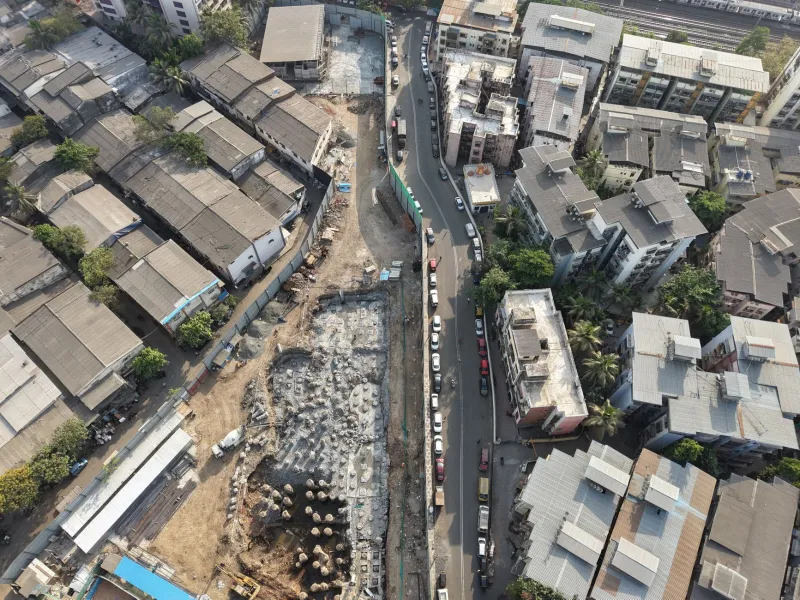
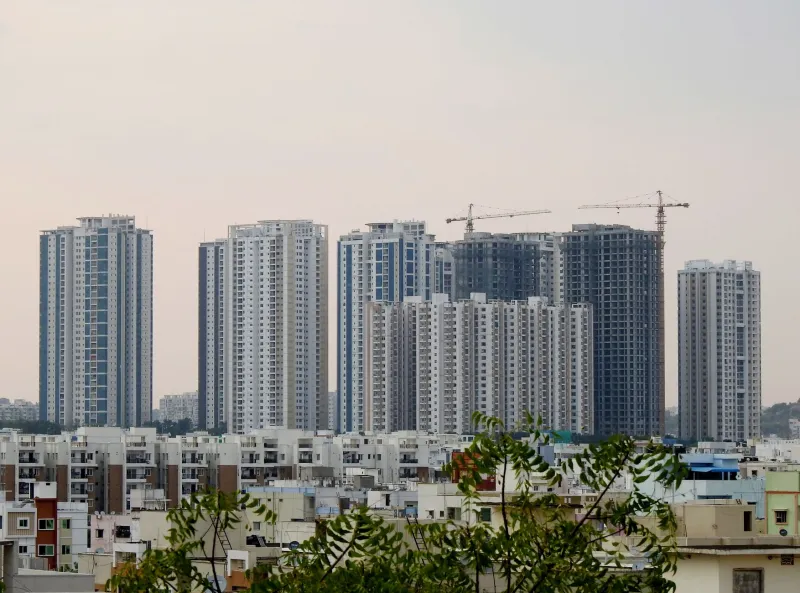
Bengaluru's outer growth rings tell a similar story. The North Bengaluru corridor, energized by the Kempegowda International Airport expansion and the surrounding aerospace and technology park developments, has seen land values in select micro-markets appreciate by more than 200 percent over a ten-year horizon. The Hyderabad Financial District and its surrounding residential corridors have produced comparable figures, underpinned by the city's emergence as a preferred destination for global technology and pharmaceutical companies establishing India operations.
The Mathematics of Patient Capital
To understand why patient capital compounds faster in these markets, it helps to examine the arithmetic directly.
An American investor deploying $150,000 into a well-selected land parcel on Bengaluru's northern periphery in 2014 would, at a conservative 15 percent compound annual appreciation rate, be sitting on an asset valued at approximately $608,000 today. That same $150,000 invested in a comparable land position in San Jose's suburban fringe — assuming an 8 percent annual appreciation rate — would have grown to roughly $324,000 over the same period.
The differential is not marginal. It is transformational. And critically, the Indian land investment carried a dramatically lower entry cost basis, meaning the investor's initial capital was exposed to far less concentration risk.
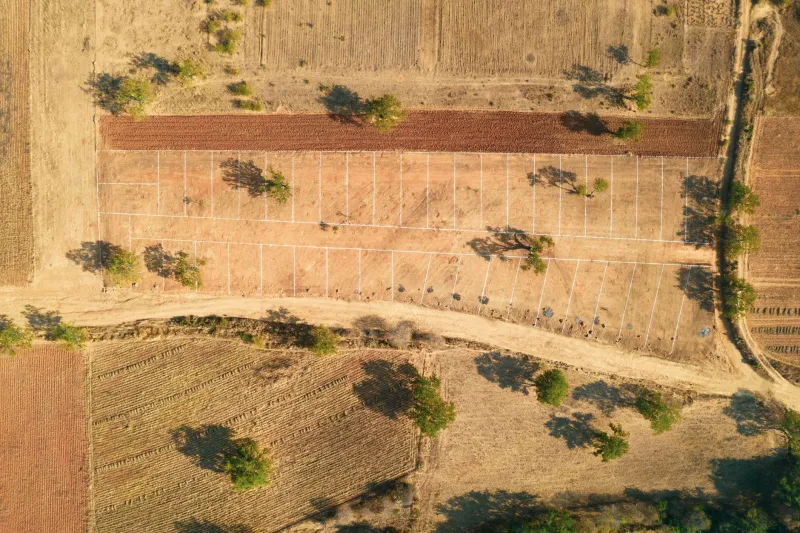
This is the compounding advantage that Akshaya Lands has built its platform around: the recognition that wealth is not merely a function of asset quality, but of entry price relative to growth trajectory. India's Tier-2 cities currently offer both — high-quality growth trajectories at entry prices that the American market has not seen in decades.
Navigating the Investment Landscape with Confidence
For US-based investors, the most common point of hesitation is not the opportunity itself — it is the mechanics of participation. Questions around legal title verification, repatriation of returns, and on-the-ground management are entirely legitimate concerns, and they deserve direct answers rather than dismissal.
India's Foreign Exchange Management Act (FEMA) framework permits persons of Indian origin (PIOs) and non-resident Indians (NRIs) to acquire residential and commercial land in India, with repatriation of sale proceeds governed by clear Reserve Bank of India guidelines. Title insurance products have matured considerably in the Indian market over the past decade, offering an additional layer of protection for investors conducting due diligence from abroad.
Platforms like Akshaya Lands serve precisely this function — providing curated, verified land opportunities in high-growth corridors, supported by transparent documentation, local legal partnerships, and structured guidance for the NRI and diaspora investor community. The goal is to remove the friction that has historically kept overseas Indians and international investors from accessing markets that domestic buyers have quietly profited from for years.
The Generational Wealth Argument
There is a longer-horizon argument worth making here, one that extends beyond ten-year appreciation charts.
Generational wealth is built at the intersection of undervalued assets and long time horizons. The families that built lasting wealth through American real estate largely did so by acquiring land in cities — Los Angeles, Houston, Phoenix — before those cities became what they are today. That moment, for most American metros, has passed.
India's secondary cities are, in many meaningful respects, at the stage that Phoenix was in 1985 or Austin in 2005. The infrastructure investment is accelerating. The employment base is diversifying. The demographic tailwind is powerful and sustained. And the land is still priced at levels that allow genuine wealth creation rather than merely wealth preservation.
For American investors willing to exercise the patience that great land investment has always demanded, India's Tier-2 cities do not represent a speculative bet. They represent a disciplined allocation to one of the most compelling long-duration growth stories available in the global real estate landscape today.
Akshaya Lands exists to help investors navigate that story — one carefully selected parcel at a time.